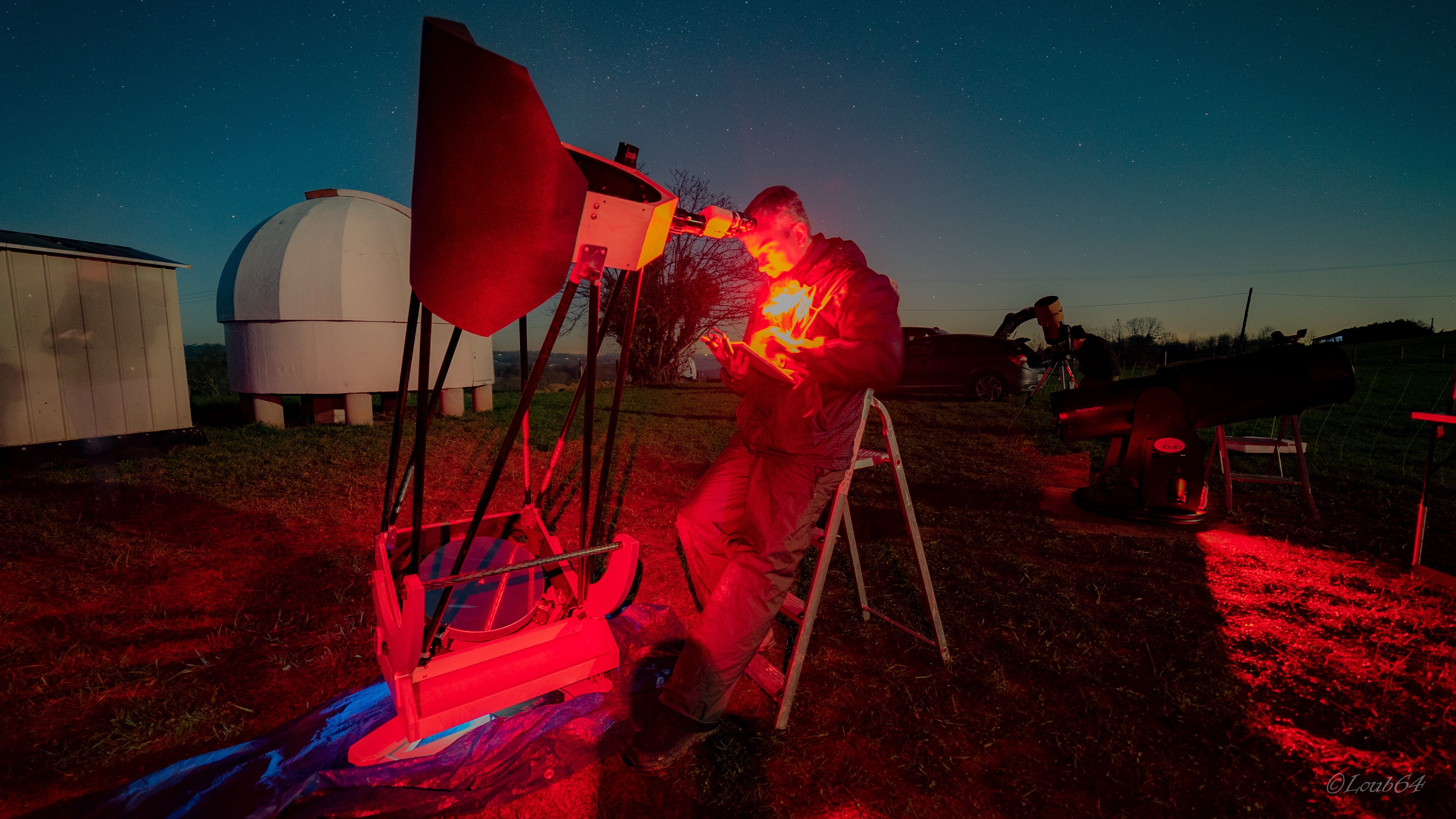
A quick introduction?
Hello! My name is Florian Rabiller, I’m 41 years old, and I fell into astronomy about thirty years ago. After a long break, I was able to get back into it in 2019, relaunched by my daughter who wanted to see Saturn! I only practice visual observation, at home despite light pollution, and in the mountains to find the most beautiful skies whenever I can.
What made you want to start astro-drawing?
I very naturally took up drawing to keep a record of my observations. I quickly realized that it was also an excellent way to improve the perception of details and the quality of observation. Indeed, drawing requires a longer, more organized observation, and allows, like long exposure photography, to accumulate perceived details by adding them progressively on paper.
How do you draw? (tools, supports, telescope, eyepieces…)
I started drawing with a C8 on an equatorial mount. Then I built an ultra-compact 150mm Dobsonian and a 400mm Dobsonian, for which I then built an equatorial platform to regain the tracking comfort I had with the C8. Dobsonian-type telescopes are for me the most suitable for visual observation thanks to the large diameter that can be achieved, and the ease of setup. I also observe the sun with a white light filter on the C8, and with a small 60mm Halpha refractor. I use eyepieces with a wide field and good comfort to facilitate observation, and a binocular head, systematically for planetary and for the brightest deep sky objects. Binocular vision is indeed more natural and relaxing, allowing to perceive more details and observe longer. I draw on a white paper pad, with pencils. I then photograph the drawings and quickly process them by computer to make a “negative” closer to reality. The drawing is done at the eyepiece, with very low lighting for deep sky objects so as not to harm observation. I use a very faintly luminous red lamp for this, or a white lamp for planetary drawings that I make with colored pencils on templates (that Nicolas Biver has made available on his site).
What are your best memories or your favorite drawings?
My most beautiful astronomical memory is the 1999 Solar Eclipse! But I have wonderful memories of observations in the Pyrenees, with very pure sky! The galaxies then reveal superb details and shapes in their very varied spirals, shaped by gravitational forces. One can realize the immensity of the universe in which we float by observing this spectacle! I think one of my favorite objects is the M51 galaxy, by the way the first one I drew.
What is the most complicated object you’ve had to draw? And which one would you like to do or redo?
I also really enjoy observing the solar system and particularly Jupiter, for the richness of its cloud bands, which change very quickly and for the spectacle of the ballet of satellites and their shadows. Drawing Jupiter is difficult because of the rapid rotation of the globe, which requires capturing all the very complex structures in half an hour at most. In deep sky, small galaxies are difficult to “decipher” and require very good sky, very stable and transparent. Large nebulae are fascinating too, and require time at the eyepiece to transcribe the large expanses of nebulosity. I have already drawn the Veil Nebula and the Rosette several times, but without a satisfactory result. But ultimately that’s not very important and it will be an opportunity to sketch them again!
Do you have any advice for someone who wants to start drawing?
Don’t be afraid to start drawing, nor be afraid of the result. Drawing should be taken as an observational note-taking tool that will enrich them, keep a record and allow the experience to be shared!
Can you send me a drawing you would like to share and/or a link to a blog or website?
Astrogribouille - Astronomical Drawings
Astrogribouille - Instrument Making
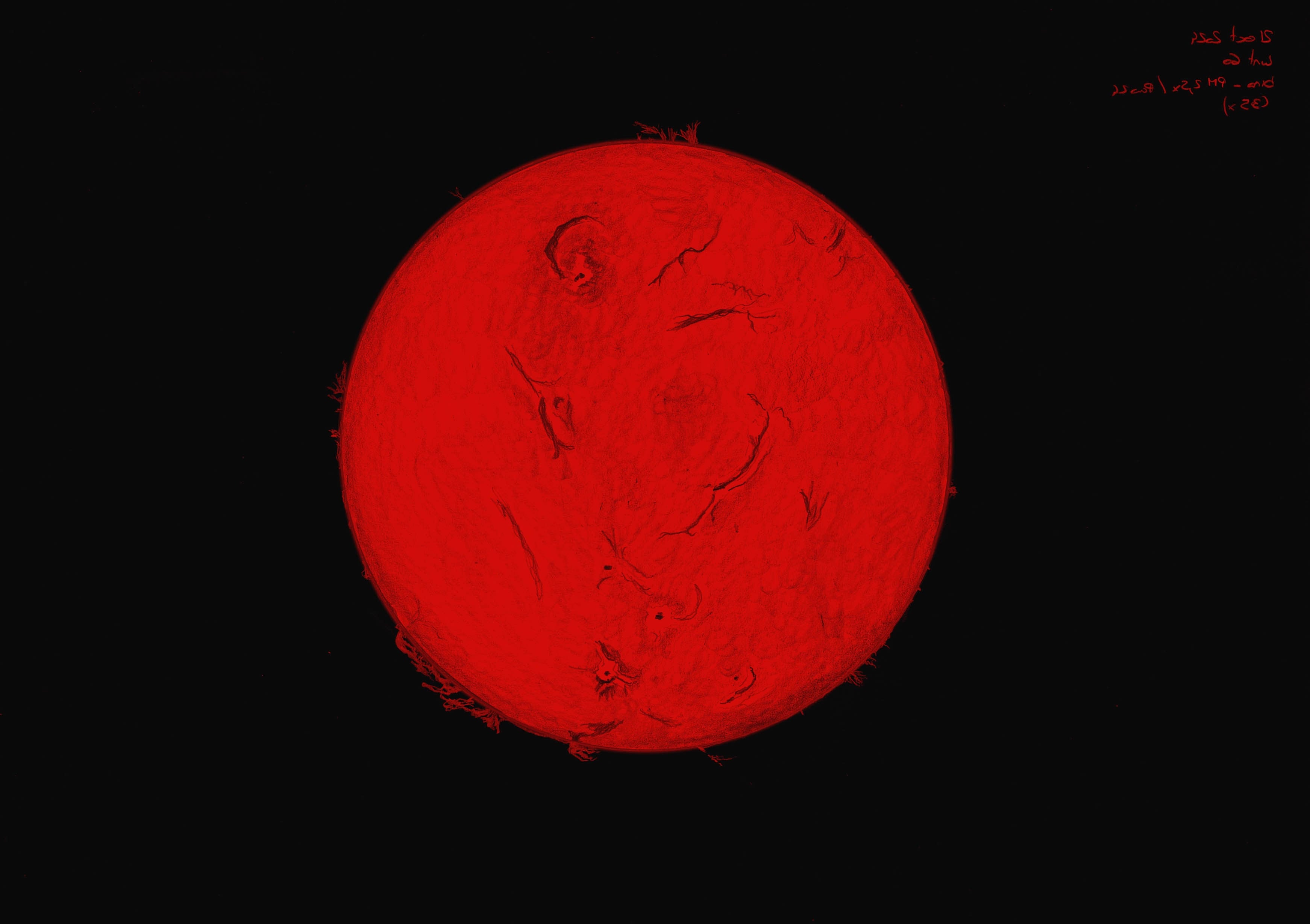
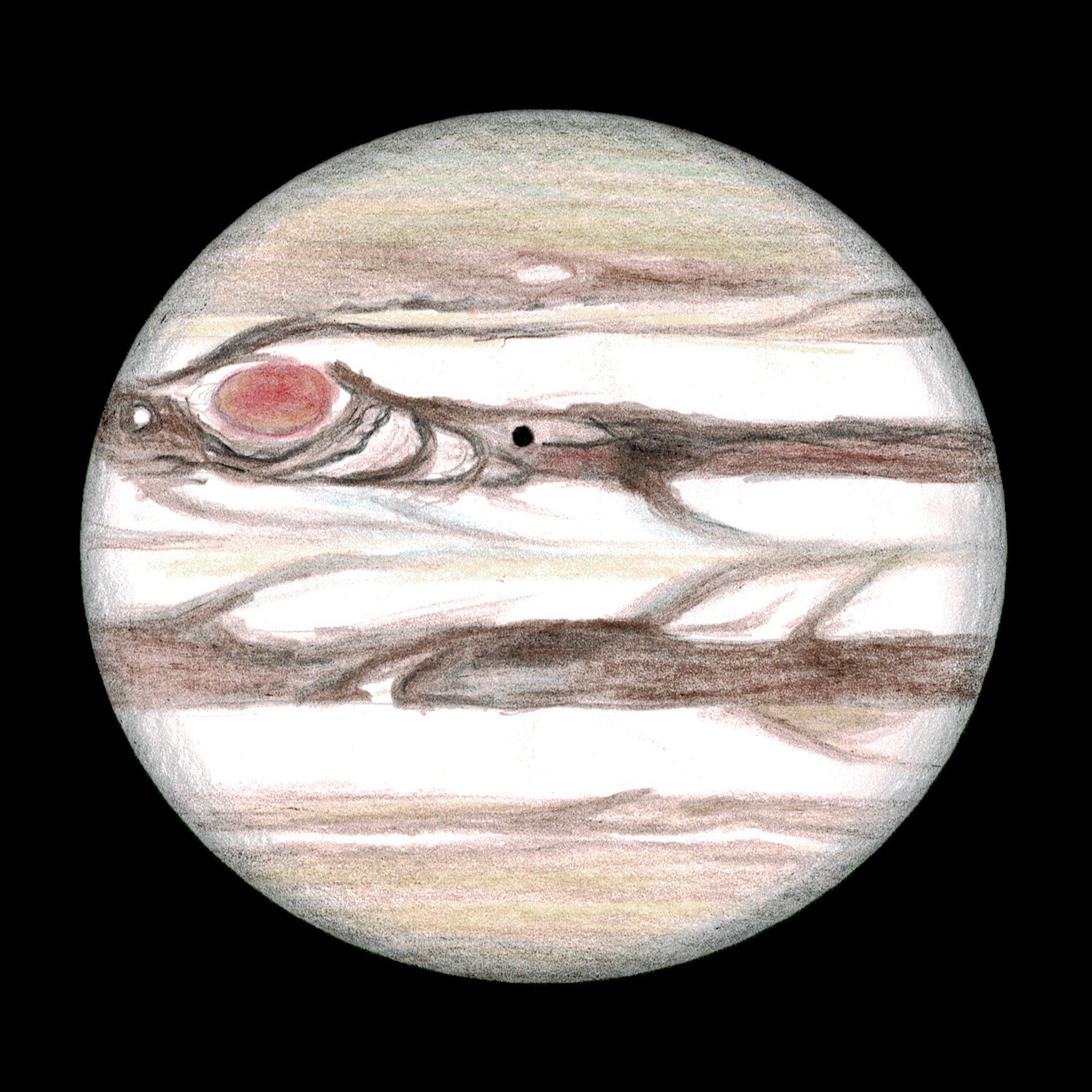
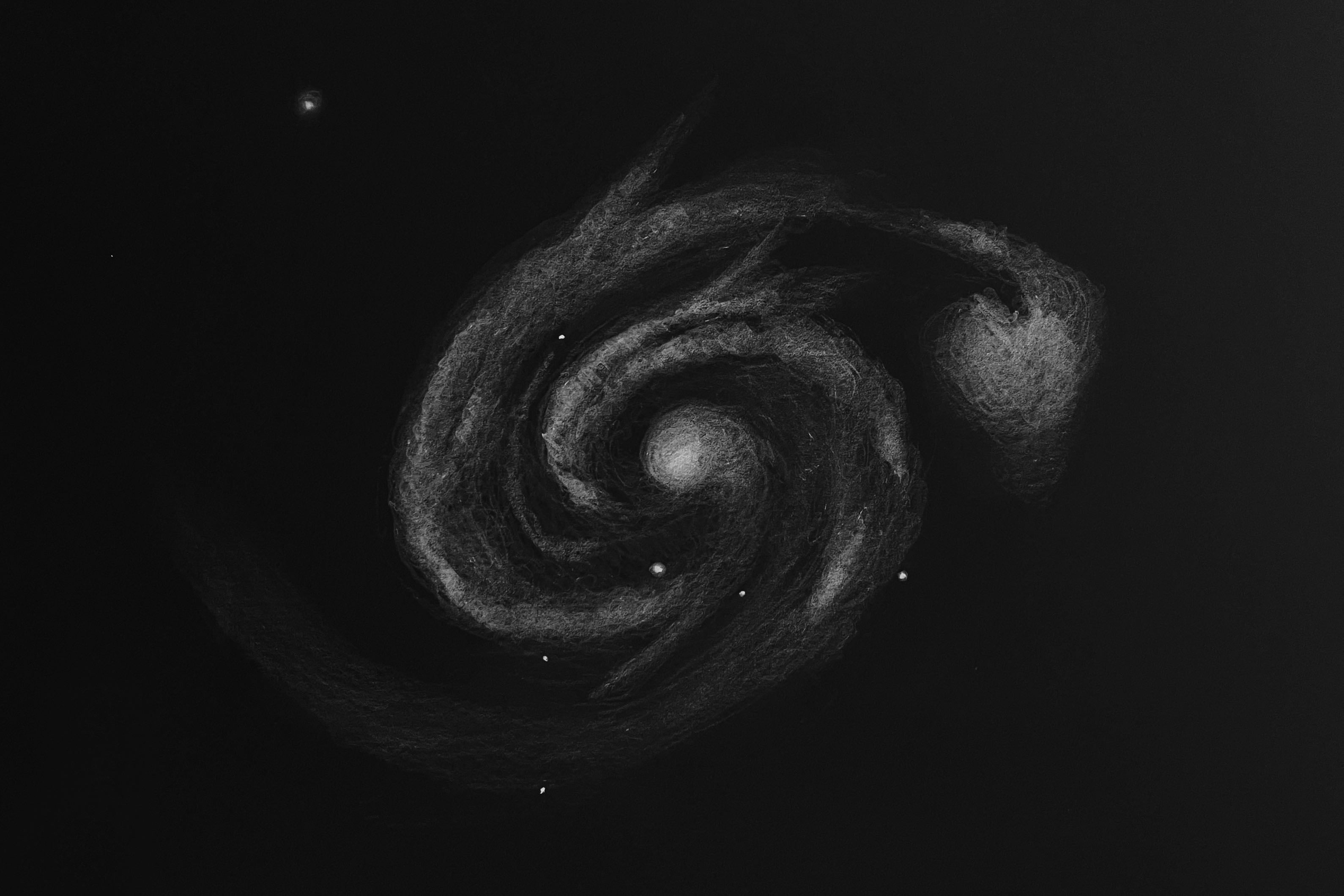
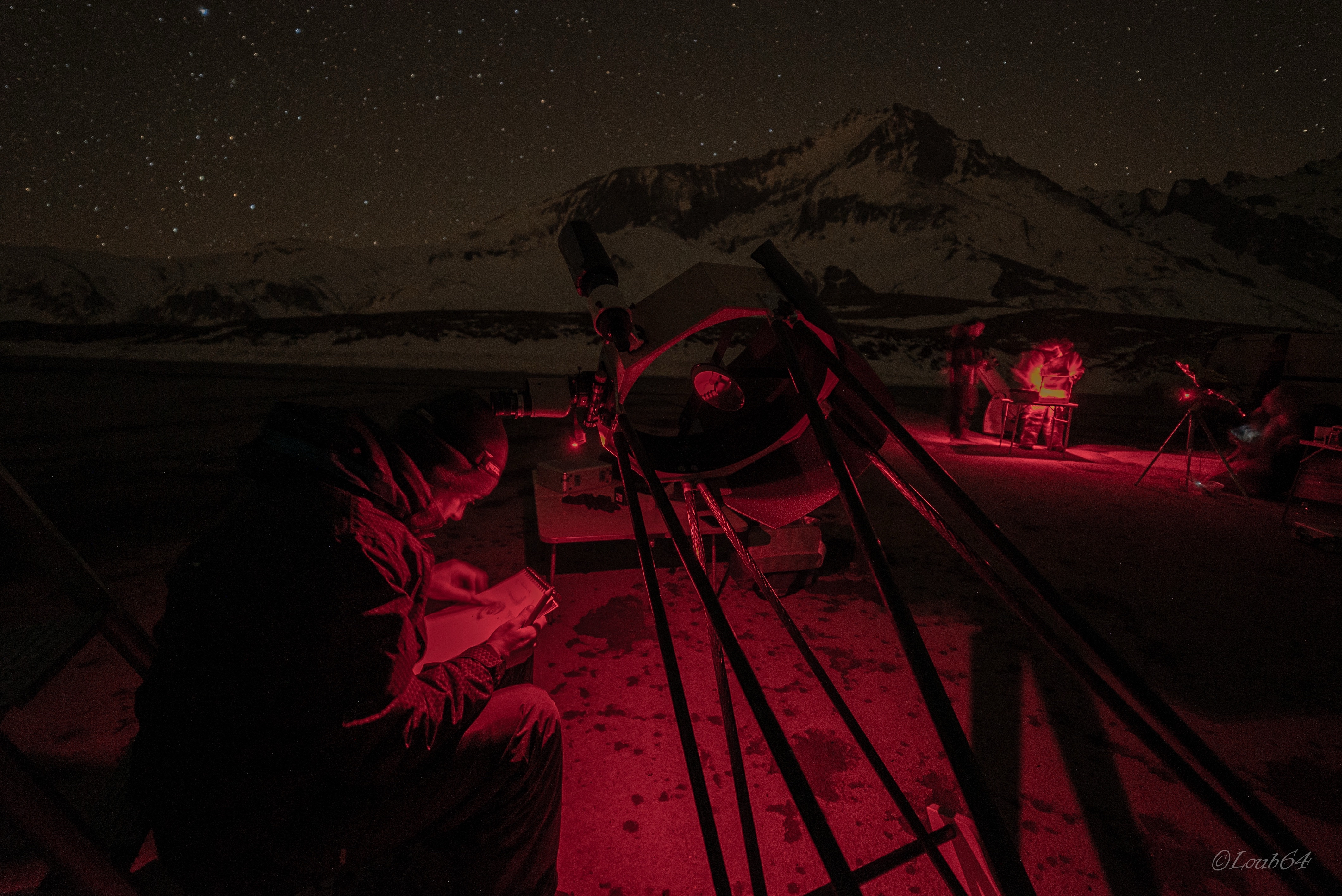
Florian Rabiller